

Computing
Our Vision
At our school, we believe that computing is an essential part of preparing children for life in an increasingly digital world. We aim to develop confident, creative and responsible users of technology who can think computationally, solve problems and communicate effectively using a range of digital tools.
Through our computing curriculum, pupils develop the knowledge and skills needed to understand the digital world around them while learning how to use technology safely, respectfully and responsibly. We want every child to leave primary school with the confidence to embrace future technologies and the resilience to adapt to an ever-changing digital landscape.
To support this, we deliver our computing curriculum through Twinkl's Digital Sparks, a progressive, enquiry-based programme that fully meets the requirements of the National Curriculum for Computing.
Curriculum Intent
Our computing curriculum is designed to ensure that every child:
-
develops confidence and independence when using technology;
-
understands how computers and digital systems work;
-
designs, writes, tests and improves computer programs;
-
creates high-quality digital content for a range of purposes;
-
develops computational thinking and problem-solving skills;
-
becomes a safe, respectful and responsible digital citizen;
-
understands the opportunities and challenges presented by emerging technologies, including Artificial Intelligence (AI);
-
is well prepared for secondary education and the digital world beyond school.
Our curriculum encourages curiosity, creativity and resilience, ensuring that all pupils can achieve success regardless of their prior experience with technology.
Curriculum Implementation
Computing is taught as a discrete subject each half term using the Digital Sparks curriculum, while digital skills are also applied across the wider curriculum whenever appropriate.
Learning is organised into carefully sequenced units that progressively build children's knowledge and skills throughout their primary education. Each lesson begins with an enquiry question that encourages children to think critically, investigate ideas and solve problems through practical exploration.
Children develop their understanding through a wide range of engaging activities including:
-
programming using age-appropriate software;
-
creating digital artwork, animations, presentations, audio and video;
-
exploring computer systems and networks;
-
collecting, interpreting and presenting data;
-
investigating how technology impacts everyday life;
-
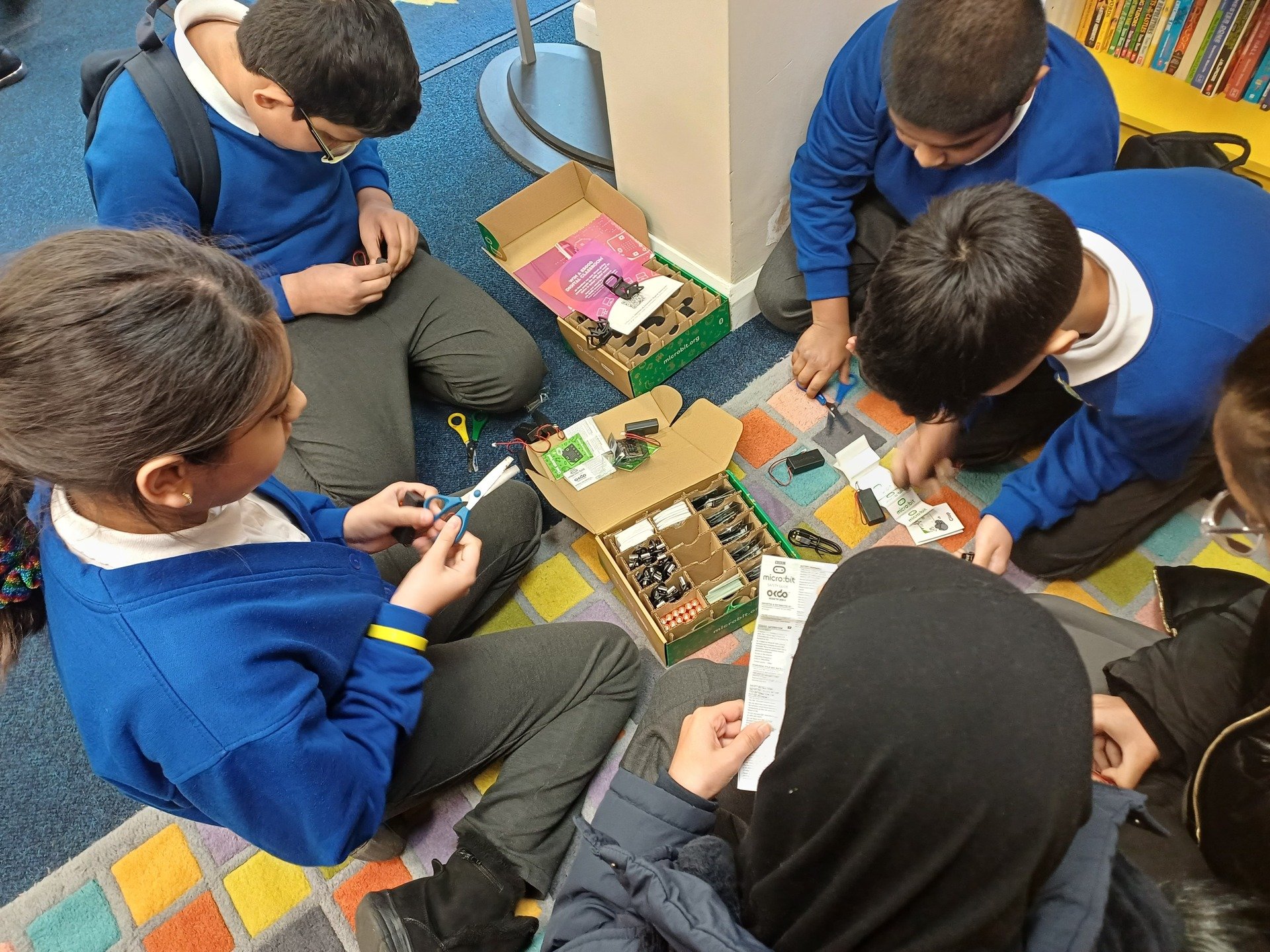
using programmable devices and physical computing equipment;
-
learning about Artificial Intelligence and its role in modern society.
Digital Citizenship is woven throughout every unit, ensuring pupils regularly revisit key messages about online safety, respectful communication, privacy, wellbeing and responsible technology use.
The curriculum is fully inclusive and provides opportunities for challenge, support and adaptation so that every child can succeed.
Curriculum Overview
Throughout their time at our school, children develop knowledge and skills across eight key areas:
-
Digital Foundations – developing confidence using digital devices and software.
-
Programming – designing, creating, testing and debugging programs.
-
Computer Systems and Networks – understanding how technology connects and communicates.
-
Data and Information – collecting, analysing and presenting data.
-
Creating Media – producing digital content including images, audio, animation and video.
-
Digital Citizenship – staying safe, respectful and responsible online.
-
Physical Computing – controlling and programming physical devices.
-
Artificial Intelligence – exploring how AI works, where it is used and how it should be used responsibly.
Knowledge and skills are carefully sequenced so that children revisit key concepts and deepen their understanding year after year.
Online Safety
Online safety is a fundamental part of our computing curriculum and is embedded throughout all areas of learning rather than taught as a standalone unit.
Children learn how to:
-
protect their personal information;
-
communicate respectfully online;
-
identify reliable information;
-
recognise potential risks;
-
respond appropriately to concerns;
-
understand their digital footprint;
-
use technology in ways that support their wellbeing.
We believe that educating children to become responsible digital citizens is just as important as teaching technical computing skills.
Assessment
Assessment is ongoing throughout every unit. Teachers use questioning, observations, practical activities and completed digital projects to monitor children's understanding and identify next steps in learning.
Pupils are encouraged to reflect on their own progress, celebrate achievements and identify areas for further development. This ensures learning is responsive and enables all children to make strong progress.
Computing Across the Curriculum
Technology enhances learning across many subjects. Children regularly apply their computing skills to support learning in English, mathematics, science, geography, history, art and design.
Examples include:
-
creating multimedia presentations;
-
collecting and analysing scientific data;
-
producing digital artwork;
-
researching information safely online;
-
creating videos and podcasts;
-
presenting learning through a range of digital media.
This cross-curricular approach helps children understand how computing skills are used in everyday life.
The Impact of Our Curriculum
By the time children leave our school they are confident, capable and responsible users of technology. They understand how digital systems work, can apply computational thinking to solve problems and create a range of digital content independently.
Most importantly, they develop the confidence, resilience and curiosity to embrace new technologies safely and responsibly throughout their education and beyond.
Our pupils leave us as digitally literate young people who are well prepared for the next stage of their learning and equipped with the skills needed for the future.
Supporting Learning at Home
Parents and carers play an important role in helping children develop healthy and responsible digital habits.
We encourage families to:
-
talk regularly about online safety;
-
set appropriate boundaries for screen time;
-
explore technology together;
-
encourage creativity through digital projects;
-
report any online concerns promptly.
Working together helps ensure children develop the knowledge, confidence and judgement needed to use technology positively both in and beyond school.
Engaging and Inclusive learning
Digital Sparks uses enquiry questions and exciting real-world contexts to make computing meaningful and enjoyable for every child. Lessons encourage collaboration, creativity, problem-solving and resilience while providing opportunities for all learners to succeed through adaptable activities and clear progression.
Preparing Children for Tomorrow
Technology continues to evolve rapidly, and we believe it is essential that our pupils develop the digital literacy, computational thinking and critical thinking skills they will need for the future. By following the Digital Sparks curriculum, we ensure our children are not only confident users of technology but also thoughtful digital citizens who understand how to use it safely, responsibly and creatively.
Throughout their computing journey, children are supported by the Digi Sparks – a team of engaging characters who introduce new learning, ask enquiry questions and encourage pupils to think like digital problem-solvers. These characters help make computing fun, memorable and accessible for children of all ages while promoting curiosity, creativity and resilience.
Subject LTP
Enhanced Curriculum Experiences
Computing skills are taught both discretely and across the wider curriculum, supporting other areas of learning across the school. Children have experiences of all three strands in each year group right from the beginning of school, but the subject knowledge imparted becomes increasingly specific and in depth. As children move through school, they actively build on their learning from previous years, with more complex skills being taught.
To ensure our young computer scientists become life long learners, we plan for a rich and innovative environment that every child has access to. This includes key vocabulary, a range of computing equipment and high quality programmable devices. In order to develop computing capital and apply their skills, children are provided with a broad range of meaningful contexts, enriching the classroom environment and encouraging oracy through discussion, discovery and presentation. These opportunities ensure they can see the purpose and reason for computing beyond the classroom.
Parent support
Computing in the national curriculum - a guide for primary teachers (computingatschool.org.uk)
Supporting primary school teaching | Barefoot Computing
https://projects.raspberrypi.org/en/codeclub
https://www.saferinternet.org.uk/advice-centre/young-people/resources-3-11s
Computing lead: Mrs Daji
Link governor: Razina Laher